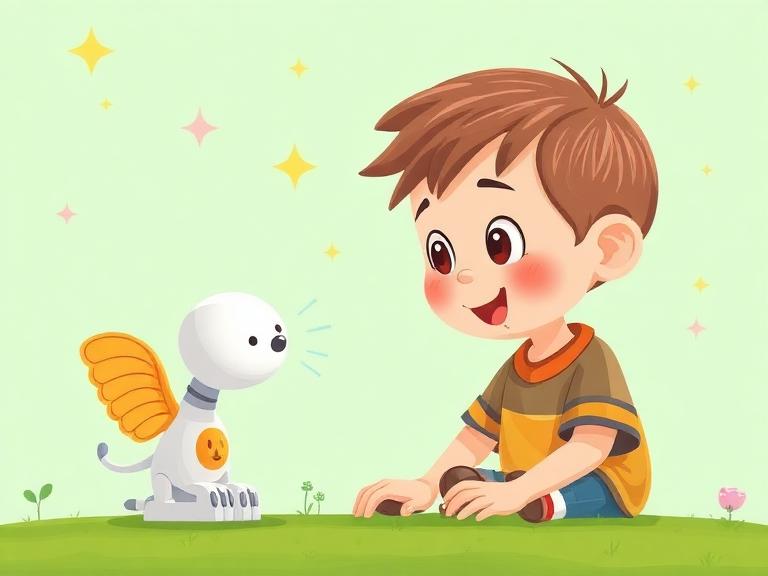
Homework has always been a part of student life. Whether it is solving a difficult maths problem, writing an essay, understanding a science chapter, or preparing for an upcoming test, students often need extra support outside the classroom.
Today, that support can come from artificial intelligence.
ChatGPT has quickly become one of the most talked-about tools among students, parents, and teachers. A child who does not understand a topic can ask AI to explain it in simpler words. A student struggling with an assignment can request examples, practice questions, or step-by-step guidance.
But there is also an important question: Is ChatGPT for homework helping children learn, or is it simply becoming an easy shortcut?
The answer depends largely on how it is used.
Used responsibly, ChatGPT can be a valuable learning companion. Used carelessly, it can encourage students to copy answers without understanding the subject. For parents and educators exploring AI for Kids, finding the right balance is becoming increasingly important.
What Is ChatGPT’s Role in Homework?
ChatGPT can answer questions, explain concepts, generate examples, help students brainstorm ideas, and provide practice exercises. This makes it useful when a child needs help but does not have immediate access to a teacher, parent, or tutor.
For example, instead of asking:
“What is the answer to this question?”
A student can ask:
“Can you explain this maths concept step by step without giving me the final answer?”
The second approach turns AI into a learning assistant rather than an answer machine.
This distinction is important. The goal of homework is not simply to submit the correct answer. Homework helps students practise what they have learned, identify weaknesses, and develop independent thinking.
Recent developments in AI education increasingly focus on this learning-first approach. Tools designed for students are beginning to use guiding questions, step-by-step support, and knowledge checks rather than simply handing over answers.
How ChatGPT Can Be a Helpful Learning Tool
When used correctly, ChatGPT can support students in several meaningful ways.
1. Explaining Difficult Concepts in Simple Language
Every student learns differently. Sometimes a teacher’s explanation may not immediately make sense, but hearing the same concept explained differently can make everything clearer.
For example, a student struggling with photosynthesis could ask ChatGPT to explain it:
- In simple language
- With a real-life example
- As a short story
- At a Class 5 or Class 8 reading level
This flexibility can make learning less frustrating.
For children who need additional explanations, AI can act like an always-available study companion. However, the child should still verify information and connect the explanation with their school textbook and teacher’s guidance.
2. Helping Students Practise
One of the best uses of AI for homework is generating practice.
A student preparing for a maths test could ask ChatGPT to create ten similar problems without showing the answers. After solving them independently, the student could then use AI to check the work and explain any mistakes.
This approach keeps the child actively involved.
Instead of replacing learning, AI becomes a tool for more practice.
3. Supporting Brainstorming
Writing assignments can be difficult, especially when students do not know how to begin.
ChatGPT can help children brainstorm ideas for:
- Essays
- Stories
- Speeches
- Science projects
- Presentations
- Creative writing assignments
For example, if a student needs to write an essay about environmental protection, AI can suggest possible points and questions to explore.
The student should then develop those ideas in their own words and add their own opinions.
That is where the real learning happens.
4. Giving Immediate Feedback
Students often have to wait until the next day to ask a teacher about a mistake. AI can provide immediate explanations when used carefully.
A child might ask:
“Can you check my answer and explain where my reasoning went wrong?”
This can encourage students to learn from mistakes rather than simply looking for the correct answer.
When ChatGPT Becomes a Shortcut
The problem begins when students stop thinking for themselves.
Imagine a student copying a homework question into ChatGPT, receiving a complete answer, and submitting it without reading or understanding it.
The homework may be completed.
But has the student learned anything?
Probably not.
This is the biggest concern surrounding ChatGPT for homework. A perfectly written answer may result in a good grade, but the student may struggle when asked to explain the topic in class or solve a similar question during an exam.
AI should reduce confusion, not eliminate effort.
UNESCO’s guidance on generative AI in education emphasizes a human-centred approach that protects learner agency and ensures technology genuinely benefits students rather than replacing human learning and judgment.
The Risks of Copying AI-Generated Homework
Using AI to complete an entire assignment without understanding it can create several problems.
Loss of Independent Thinking
Children develop critical-thinking skills by asking questions, making mistakes, and finding solutions.
If AI does all the thinking, students lose valuable opportunities to develop these skills.
Incorrect Information
ChatGPT can sometimes provide inaccurate or incomplete information. Students should not assume that every AI-generated answer is automatically correct.
Important facts should be checked using reliable textbooks, educational resources, and teacher-approved sources.
Academic Integrity Concerns
Schools have different rules regarding AI use. Some teachers may allow AI for brainstorming or explanations but not for writing complete assignments.
Students should understand their school’s policy before using AI for homework. Presenting AI-generated work as entirely their own may also violate academic honesty rules.
Reduced Creativity
If every student asks AI to write the first draft, many assignments may begin to sound similar.
Children have unique experiences, ideas, and opinions. Their writing does not need to sound perfect to be valuable.
Sometimes an imperfect answer written independently teaches more than a flawless answer copied from a tool.
How Parents Can Guide AI for Kids
Parents do not necessarily need to ban AI tools. Instead, they can teach children how to use them responsibly.
The first step is to change the question from:
“Can my child use AI?”
to:
“How can my child use AI to learn better?”
Parents can encourage children to use AI for explanations, practice questions, quizzes, and feedback rather than asking it to complete assignments.
For example, children can follow a simple rule:
Think First, Ask AI Second
Before using ChatGPT, the student should attempt the question independently.
After making an effort, they can use AI to:
- Ask for hints
- Request another explanation
- Check their understanding
- Find mistakes
- Generate practice questions
This keeps the child’s own thinking at the centre of the learning process.
For parents who want to introduce AI concepts in a child-friendly way, this guide on ChatGPT for Kids can also help explain how young learners can approach AI more responsibly.
A Simple Framework for Using ChatGPT for Homework
A practical way to use ChatGPT responsibly is to follow four steps.
Step 1: Try the Homework Yourself
The student should first read the question carefully and attempt an answer.
Even if the answer is wrong, making the attempt is important.
Step 2: Ask AI for Guidance
Instead of requesting the complete answer, ask questions such as:
- “Give me a hint.”
- “Explain the first step.”
- “Can you explain this in simpler words?”
- “Show me a similar example.”
- “Ask me questions to help me solve this.”
Step 3: Check the Information
Students should compare AI-generated information with reliable sources such as textbooks, class notes, and trusted educational websites.
Step 4: Explain the Answer in Their Own Words
A good test of understanding is simple:
Can the student explain the answer without looking at ChatGPT?
If the answer is yes, the tool probably supported learning.
If the answer is no, the student may have relied on AI too heavily.
The Role of Teachers in Responsible AI Use
Teachers also play an important role in shaping how students use AI.
Simply telling students never to use AI may not always prepare them for a world where these tools are becoming increasingly common. Instead, schools can teach students the difference between responsible assistance and academic dishonesty.
Teachers can provide clear guidelines about:
- When AI use is allowed
- How students should disclose AI assistance
- Which assignments should be completed independently
- How students can verify AI-generated information
The most effective approach is likely to focus on AI literacy.
Children need to understand that AI is a tool, not an all-knowing authority.
ChatGPT and the Future of Homework
AI is unlikely to disappear from education. Instead, students will need to learn how to use it wisely.
The future of homework may involve more than simply asking students to submit an answer. Teachers may increasingly focus on the learning process, asking students to explain their reasoning, discuss how they reached a conclusion, and demonstrate their understanding.
This could actually make education more meaningful.
AI can handle repetitive tasks and provide quick explanations, while students focus on creativity, critical thinking, problem-solving, and personal expression.
The goal should not be to compete with AI.
The goal should be to teach children how to think alongside technology without becoming dependent on it.
So, Is ChatGPT for Homework Helpful or a Shortcut?
ChatGPT can be both.
It becomes a helpful learning tool when children use it to understand concepts, practise skills, receive feedback, and explore ideas.
It becomes a shortcut when students copy answers without thinking, understanding, or contributing their own work.
For families exploring AI for Kids, the most important lesson is that technology should support learning, not replace it.
A calculator did not eliminate the need to understand mathematics. Search engines did not eliminate the need to think critically. In the same way, AI should not eliminate the need for children to learn.
The smartest way to use ChatGPT is not to ask it:
“Do my homework for me.”
Instead, children should learn to ask:
“Help me understand how to do this myself.”
That small change can make all the difference.
Frequently Asked Questions
Is ChatGPT good for children’s homework?
ChatGPT can be useful for children’s homework when it is used for explanations, practice, brainstorming, and feedback. It should not replace independent thinking or allow students to submit work they do not understand.
Can students use ChatGPT to complete assignments?
Students should follow their school’s and teacher’s rules regarding AI use. Using ChatGPT for support may be allowed in some situations, while submitting AI-generated work as personal work without permission may violate academic integrity policies.
How can AI for Kids improve learning?
AI for Kids can support personalised explanations, practice questions, quizzes, brainstorming, and feedback. The best results come when children actively participate in the learning process rather than relying on AI for complete answers.
Should parents allow children to use ChatGPT?
Parents can guide children toward responsible AI use instead of treating AI as automatically good or bad. Setting clear rules, supervising younger children, and encouraging learning-focused prompts can help create healthier habits.
How can children avoid becoming dependent on ChatGPT?
Children can follow a simple rule: try the problem first and use AI second. They should ask for hints, explanations, and feedback instead of immediately requesting complete answers. They should also practise explaining concepts in their own words.