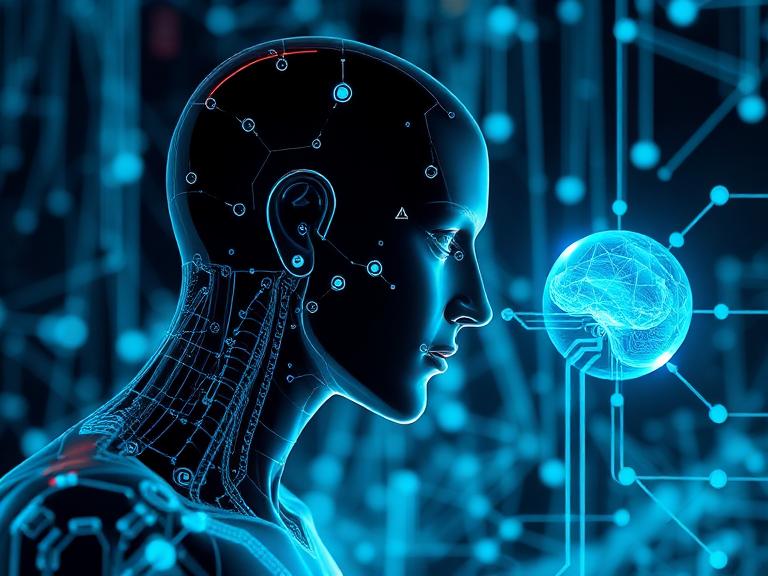
In today’s digital world, terms like Artificial Intelligence (AI) and Machine Learning (ML) are used everywhere—tech blogs, news reports, business meetings, and even daily conversations. Although many people use them interchangeably, AI and machine learning are not the same. They are closely related, but each has its own role, purpose, and capabilities.
If you’ve ever wondered what truly separates AI from machine learning, this beginner-friendly guide breaks it down clearly.
What Is Artificial Intelligence (AI)?
Artificial Intelligence is a broad field of computer science that focuses on building smart machines capable of performing tasks that normally require human intelligence.
AI aims to replicate human abilities such as:
- Problem-solving
- Reasoning
- Learning
- Understanding language
- Recognizing objects or patterns
- Making decisions
AI is the “big umbrella” under which many technologies exist—machine learning, deep learning, natural language processing, robotics, computer vision, and more.
Examples of AI in everyday life:
- Voice assistants like Siri or Alexa
- Chatbots
- Self-driving cars
- Fraud detection systems
- Smart home devices
What Is Machine Learning (ML)?
Machine Learning is a subset of AI. It focuses on creating systems that learn from data without being explicitly programmed.
Instead of telling a machine exactly what to do, we feed it data and let it identify patterns, make predictions, or improve over time.
Machine Learning enables systems to:
- Analyze large amounts of data
- Detect trends or patterns
- Predict outcomes
- Improve performance through experience
Examples of machine learning:
- Netflix recommending movies you’ll like
- Email spam filters
- Credit card fraud detection
- Product suggestions on Amazon
- Image recognition in apps
Difference Between AI and Machine Learning
Here’s a simple breakdown to make it easy to understand:
| Feature | Artificial Intelligence (AI) | Machine Learning (ML) |
|---|---|---|
| Definition | A broad field aiming to create intelligent systems | A subset of AI that trains systems to learn from data |
| Focus | Mimicking human intelligence | Learning from patterns and past data |
| Approach | Uses rules, logic, and algorithms | Uses statistical models to learn automatically |
| Goal | Create systems that can act intelligently | Improve accuracy and predictions based on data |
| Human Intervention | May require rules set by humans | Learns automatically with minimal human input |
| Examples | Robotics, voice assistants, decision systems | Recommendation engines, spam filters, pattern recognition |
AI vs Machine Learning: How They Work Together
Even though AI and ML are different, they work closely together.
- AI is the bigger concept.
- ML is one of the techniques to achieve AI.
For example:
A self-driving car is an AI system, but the ability to identify pedestrians or road signs comes from machine learning models trained on millions of images.
Where Deep Learning Fits In
You might also hear the term deep learning, which is a specialized form of machine learning.
Deep Learning uses neural networks to mimic the human brain and is especially powerful for:
- Image detection
- Speech recognition
- Complex pattern analysis
So, the hierarchy looks like this:
AI → Machine Learning → Deep Learning
Why Understanding the Difference Matters
Understanding AI vs. machine learning helps businesses, students, and tech enthusiasts make informed decisions.
It matters because:
- It helps you choose the right technologies for your projects
- It clarifies career paths in tech
- It guides businesses on where to invest
- It makes it easier to understand emerging innovations
Final Thoughts
AI and machine learning are revolutionizing the world around us, but they are not the same thing.
- AI is the broad goal: creating smart machines.
- Machine learning is the method: teaching machines to learn from data.
As technology continues to grow, understanding these differences becomes essential—whether you’re a tech enthusiast, business owner, or student stepping into the world of AI.